Eagan Concrete Pros
555-555-5555
Concrete Repair in Eagan MN

Our
concrete repair services in Eagan, MN, help you deal with damaged outdoor surfaces before they interrupt your routine. We know how frustrating crumbling steps, rough driveway patches, and worn walkways can become. Our team listens to your concerns, examines the affected areas, and recommends sensible improvements that restore usability while respecting your property, future plans, and available project budget.
What Is Concrete Repair?
Concrete repair addresses defects in a slab without automatically replacing the entire surface. Depending on the damage, work may involve filling stable cracks, rebuilding chipped edges, repairing joints, or resurfacing worn sections. We examine whether the surrounding material remains sound and look for causes such as moisture or movement, because the right repair depends on what's happening underneath the damage.
What Sets Our Service Apart
We approach each repair like a problem to solve, not a spot to cover. First, we identify where deterioration starts and whether neighboring sections are affected. Then we explain which areas can be treated, what the finish may look like, and where repairs could remain visible. You'll understand the proposed work before we bring tools and materials onto your property.
Why Choose Us?
We're careful about recommending work that suits the condition of your surface. If patching is likely to fail because a slab keeps moving, we'll say so and discuss other options. We also plan around access to doors, vehicles, and walking paths, helping reduce unnecessary disruption. You can expect consistently thoughtful communication, realistic expectations, and attention to the details that matter.
Don't let a damaged path, cracked driveway section, or crumbling step become a bigger inconvenience. Tell us what you've noticed around your property, and we'll help you understand whether a targeted repair makes sense. We're happy to answer questions about the work, discuss possible finishes, and explain the next steps. Contact our team today to request a detailed written estimate and make your outdoor areas more comfortable to use.
How Neglected Concrete Damage Can Lead to Bigger Expenses for Eagan Property Owners
A cracked front walkway, chipped garage apron, or deteriorating patio might seem like a minor problem until Minnesota's changing seasons make the damage worse. In Eagan, MN, winter moisture, freezing temperatures, and repeated thawing can gradually weaken already damaged surfaces. Small openings allow water to enter, while unstable soil and poor drainage may contribute to shifting or uneven slabs. What begins as an isolated defect can eventually affect accessibility, drainage, and the surrounding pavement. Professional concrete repair helps property owners address these concerns before they become more disruptive. By identifying the reason for deterioration and choosing an appropriate restoration method, homeowners can sometimes extend the useful life of existing surfaces without paying for unnecessary replacement.
Reducing safety concerns around your property: Raised sidewalk edges, broken steps, and uneven walking surfaces can create tripping hazards for residents and visitors. During winter, damaged sections may also collect water that freezes into slippery patches. Correcting suitable surface defects and elevation differences helps improve accessibility while making routine snow and ice removal more manageable.
Limiting the spread of surface deterioration: Cracks, chipped edges, and flaking concrete can expose more of the underlying material to moisture and weather. Repeated freezing and thawing may worsen these conditions, particularly when deicing chemicals are involved. Appropriate crack treatments, patching materials, and drainage corrections can help protect sound surrounding areas from continued deterioration.
Avoiding unnecessary demolition expenses: Not every damaged slab needs complete replacement. Localized spalling, certain stable cracks, and minor surface defects may be candidates for professional restoration when the underlying concrete remains sound. Repairing only the affected sections can sometimes reduce demolition, material disposal, and installation costs compared with removing an entire driveway, patio, or walkway.
Consider a hypothetical homeowner in Eagan's Cedar Grove area who notices that the walkway leading to their front entrance has developed several chipped corners and a shallow depression near one joint. Over time, rainwater collects along the damaged edge, and winter ice makes the pathway uncomfortable to navigate.
How Our Concrete Repair Process Works
Damaged pavement doesn't always tell the full story from the surface. We help homeowners identify what caused the deterioration before recommending a solution. Whether you're dealing with cracked sidewalks, worn steps, damaged driveways, or uneven patios, we evaluate the affected areas and explain available repair methods. Our process focuses on addressing the underlying concern, preparing the existing material, and selecting appropriate restoration techniques.
Step 1: Inspect the Damage and Determine What Is Causing It
We begin by examining the damaged surface and identifying the type of deterioration present. Hairline cracks, deep fractures, chipped corners, surface scaling, and uneven slabs can develop for different reasons. Understanding these differences helps us determine whether a localized repair is appropriate or whether more extensive work should be considered.
We look for signs of settlement, unsupported edges, improper drainage, deteriorated joints, and previous repair materials that may no longer be performing properly. We also consider how the area is used. A damaged driveway exposed to regular vehicle traffic requires a different approach than a residential walkway used primarily by pedestrians.
Step 2: Choose the Appropriate Repair Method for Each Surface
Once we understand the condition of the existing concrete, we recommend a repair method suited to the type and severity of the damage. Minor, nonstructural cracks may be candidates for compatible crack fillers or sealing materials, depending on whether movement is expected and whether moisture protection is needed. Wider cracks and damaged joints require different treatments because the materials must accommodate the conditions at those locations.
Chipped corners and localized surface deterioration may be repaired with suitable cementitious or polymer-modified patching materials. For shallow scaling, surface restoration may be considered if the remaining concrete is sound and the selected product can achieve adequate adhesion.
Step 3: Prepare the Existing Concrete and Complete the Necessary Repairs
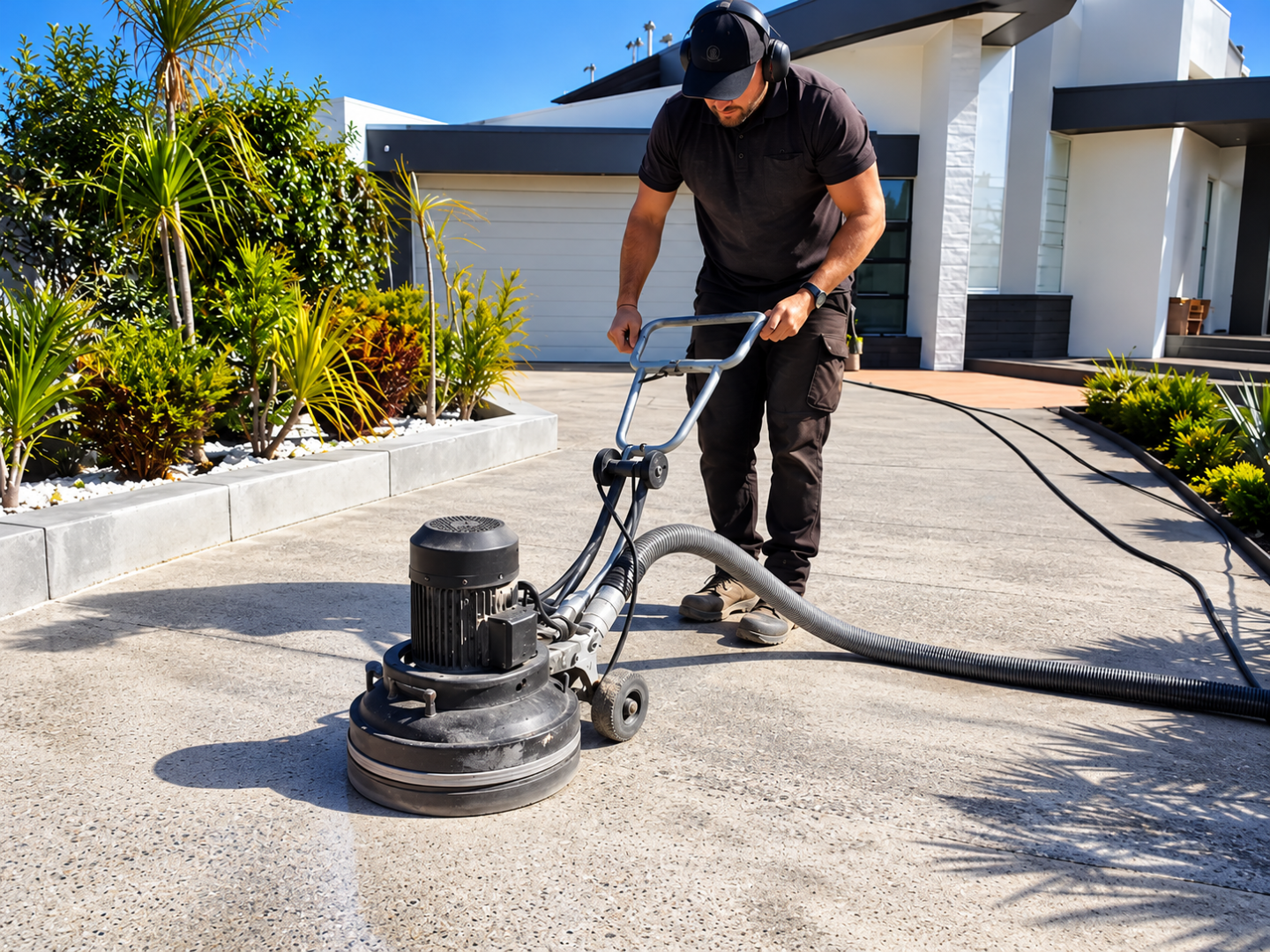
Proper surface preparation is essential when restoring damaged concrete. Repair materials need a suitable substrate to develop the intended bond, which means loose particles, contamination, and deteriorated sections must be removed before application. Depending on the project, preparation may involve mechanical cleaning, grinding, controlled removal of weak material, or saw-cutting repair boundaries. We take care to preserve surrounding sound concrete while creating an appropriate repair area.
Where patching is suitable, we select products based on the repair depth, expected traffic, outdoor exposure, and compatibility with the existing surface. Manufacturer instructions determine requirements such as substrate moisture, bonding agents, minimum thickness, and application conditions. Cracks and joints are treated according to their function. Existing movement joints should not be filled rigidly in a way that prevents necessary slab movement. Where water entry contributes to deterioration, we consider whether appropriate sealing or drainage improvements are needed.
Step 4: Finish the Repaired Areas and Explain Long-Term Maintenance
After the repair materials are installed, we complete the required finishing and protection procedures. Depending on the selected method, the repaired section may need to match the surrounding texture, maintain a suitable walking surface, or meet specific drainage and elevation requirements. We review visible transitions and repaired edges to identify irregularities that may interfere with normal use. Where appropriate, we also discuss protective sealers that may help reduce moisture absorption. Sealers are not suitable for every situation, and their effectiveness depends on the product and existing concrete conditions.
Curing requirements vary between repair materials. Some specialized products develop sufficient strength relatively quickly, while others require longer protection before pedestrian or vehicle traffic can resume. Cold temperatures can also affect curing, making manufacturer instructions essential. Before the area returns to normal use, we explain the appropriate waiting period and any maintenance recommendations. We encourage homeowners to monitor repaired joints, keep drainage paths clear, and use winter maintenance practices compatible with their pavement. These simple precautions can help protect the restored surface and reduce avoidable deterioration.
Cracked walkways, chipped steps, and uneven pavement can affect how comfortably you use your property. We help homeowners explore practical concrete repair options for their concrete driveway, concrete patio, and stamped concrete surfaces based on their existing condition. Whether you're concerned about safety, appearance, or recurring damage, we're ready to discuss your project. Contact our team today to request an assessment, learn which restoration methods may be suitable, and receive an estimate for your concrete repair needs.
Frequently Asked Questions
Q: How do I know whether my damaged concrete can be repaired or needs complete replacement in Eagan?
Yes, stamped concrete can perform well in Minnesota when properly designed, installed, cured, and maintained. Freeze-thaw durability depends on suitable materials, air entrainment, drainage, and base preparation rather than the decorative pattern alone.
Winter maintenance also matters. Certain deicing chemicals can contribute to surface deterioration, particularly when used improperly or on relatively new installations. We recommend following appropriate care instructions to help preserve your decorative finish.
Q: Will stamped concrete become slippery when wet or covered with snow?
Some decorative patterns and high-gloss sealers can reduce traction, particularly during rainfall or icy conditions. Choosing a suitable texture and compatible slip-resistant additives can help improve footing.
We discuss these options during design planning, especially for walkways, outdoor steps, and frequently used entrances. No exterior surface is completely slip-proof, so appropriate snow and ice management remains important.
Q: Do I need a permit for a stamped concrete patio in Eagan, MN?
The City of Eagan requires zoning permits for patios, driveway replacements, and driveway expansions. Additional approvals may apply when improvements involve retaining walls, public rights-of-way, or other regulated construction.
We recommend confirming the applicable requirements before beginning excavation. Reviewing permits, property restrictions, and proposed dimensions early can help prevent unnecessary project changes.
Q: How much does stamped concrete cost compared with regular concrete?
Stamped finishes generally cost more than traditional broom-finished surfaces because decorative applications require additional materials, labor, and specialized finishing techniques.
The final price depends on the installation area, preparation requirements, pattern complexity, color selections, and sealing options. Custom borders or multiple colors can increase the project scope. We recommend comparing detailed estimates that identify both structural preparation and decorative finishing.