Eagan Concrete Pros
555-555-5555
Concrete Driveway in Eagan MN

Our
concrete driveway services in Eagan, MN, give homeowners a way to replace rough, aging pavement with an entrance they can feel proud of. We look beyond appearances to plan for vehicle weight, water runoff, and Minnesota weather. From your first questions to the final walkthrough, we focus on clear expectations, careful workmanship, and a driveway designed for daily use.
What Is a Concrete Driveway?
A concrete driveway is a paved surface built to support cars, trucks, and everyday travel between the street and your garage. Unlike loose gravel, it creates a defined parking area that is easier to shovel and maintain. We consider slab thickness, compacted support, drainage, and control joints so the finished driveway fits your property and handles use through Minnesota seasons.
What Sets Our Service Apart
We don't begin with a one-size-fits-all layout. We study where snow piles up, how rainwater leaves the driveway, and whether the existing entrance creates awkward turns. Then we explain your options in plain language before work starts. Throughout construction, we pay attention to transitions at the street and garage, keep you informed, and treat nearby landscaping and walkways with care.
Why Choose Us?
We treat concrete slab installation as more than a pouring job. As residential concrete contractors, we consider how your household parks, moves, and manages winter cleanup. Our broader knowledge of commercial concrete services also informs how we think about everyday access and heavier traffic. We explain material choices, schedule expectations, and maintenance needs so you can decide with greater confidence.
Tired of steering around cracks, standing water, or an entrance that no longer suits your vehicles? Tell us what needs to change, and we'll help you explore a driveway design that makes sense for your property. We can discuss the condition of your existing pavement, explain possible preparation needs, and outline your next steps. Reach out today to request an estimate and start planning an entrance you'll enjoy using.
What a Failing Concrete Driveway Can Cost Eagan Homeowners Through Minnesota Winters
A driveway that starts breaking apart after winter is more than an inconvenient home improvement project. Crumbling edges, uneven slabs, and widening cracks can make parking difficult, interfere with snow removal, and allow water to collect where it shouldn't. In Eagan, MN, repeated freezing and thawing can make existing pavement damage progressively worse, especially when drainage problems or an unstable base are involved. A properly constructed concrete driveway provides a durable surface for daily vehicle traffic while accounting for Minnesota's demanding seasonal conditions. Addressing deterioration before it affects surrounding surfaces can help homeowners avoid additional repair expenses and maintain a safer, more functional entrance to their property.
Reduced damage from winter conditions: Minnesota driveways endure freezing temperatures, melting snow, and repeated exposure to moisture. Water that enters existing cracks can freeze and expand, contributing to further deterioration. A properly prepared base, suitable air-entrained concrete mixture, and planned control joints help the new surface withstand seasonal movement and weather exposure. These features are especially important for properties where winter conditions place repeated stress on exterior pavement.
Fewer drainage and accessibility problems: A driveway with settled sections or improper grading may collect rainwater and melting snow near the garage entrance. During colder weather, these low spots can develop patches of ice that create slipping hazards and interfere with vehicle access. Correcting the slope and addressing underlying drainage concerns during replacement can help direct surface water toward appropriate discharge areas rather than allowing it to accumulate beside the home.
Improved curb appeal and long-term property value: The driveway is often one of the first exterior features visitors notice. Deep cracks, surface scaling, and uneven sections can make an otherwise well-maintained property appear neglected. A professionally finished surface creates a more consistent entrance, complements surrounding landscaping, and provides reliable access for household vehicles. Choosing suitable dimensions and finishes also helps the driveway accommodate your family's everyday parking needs.
Consider a hypothetical homeowner living near Lebanon Hills Regional Park in Eagan. Their two-car driveway has developed several uneven sections, and one corner has settled enough to create a shallow depression near the garage. Each spring, melting snow collects in the low area, while winter snow removal becomes increasingly difficult because the shovel catches on raised slab edges.
After evaluating the existing pavement, the homeowner learns that localized patching would not correct the underlying settlement. A replacement project could involve removing the damaged slabs, correcting the base, establishing appropriate drainage, and installing a new surface designed for Minnesota weather. Rather than repeatedly addressing the same defects, the homeowner would have an opportunity to correct the conditions contributing to the deterioration.
How Our Concrete Driveway Installation Process Works
A dependable driveway begins below the finished surface. We help homeowners plan installations that account for soil conditions, vehicle access, drainage, and winter weather. Whether you're replacing deteriorated pavement or adding a new driveway, we evaluate the property before recommending a layout. Our approach focuses on careful preparation, appropriate materials, and construction details that support dependable everyday use.
Step 1: Property Evaluation, Driveway Layout, and Drainage Planning
We begin by examining the proposed driveway area and discussing how you use your property. The number of vehicles, garage configuration, available parking space, and location of nearby walkways can all influence the layout. For replacement projects, we look at existing pavement conditions, settled areas, damaged edges, and signs of water collecting near the garage or foundation. Drainage receives particular attention because the area experiences substantial snow accumulation and seasonal snowmelt. We consider how water moves across the property and whether the existing slope directs runoff toward an appropriate location. A driveway should not create drainage problems for neighboring properties or send unwanted water toward the home's foundation.
Step 2: Existing Driveway Removal and Subgrade Preparation
For replacement projects, the next stage involves removing the existing pavement and examining the material beneath it. Old slabs may be broken into manageable sections, removed from the property, and prepared for appropriate disposal or recycling. Exposing the underlying area provides an opportunity to identify unsuitable soil, deteriorated base material, and settlement that may have contributed to the original driveway's failure. We then prepare the subgrade to support the planned pavement. Depending on site conditions, this can include excavation, removal of unstable material, placement of suitable aggregate, and mechanical compaction. Proper compaction helps reduce unnecessary movement beneath the finished surface.
Step 3: Forming, Concrete Placement, and Surface Finishing
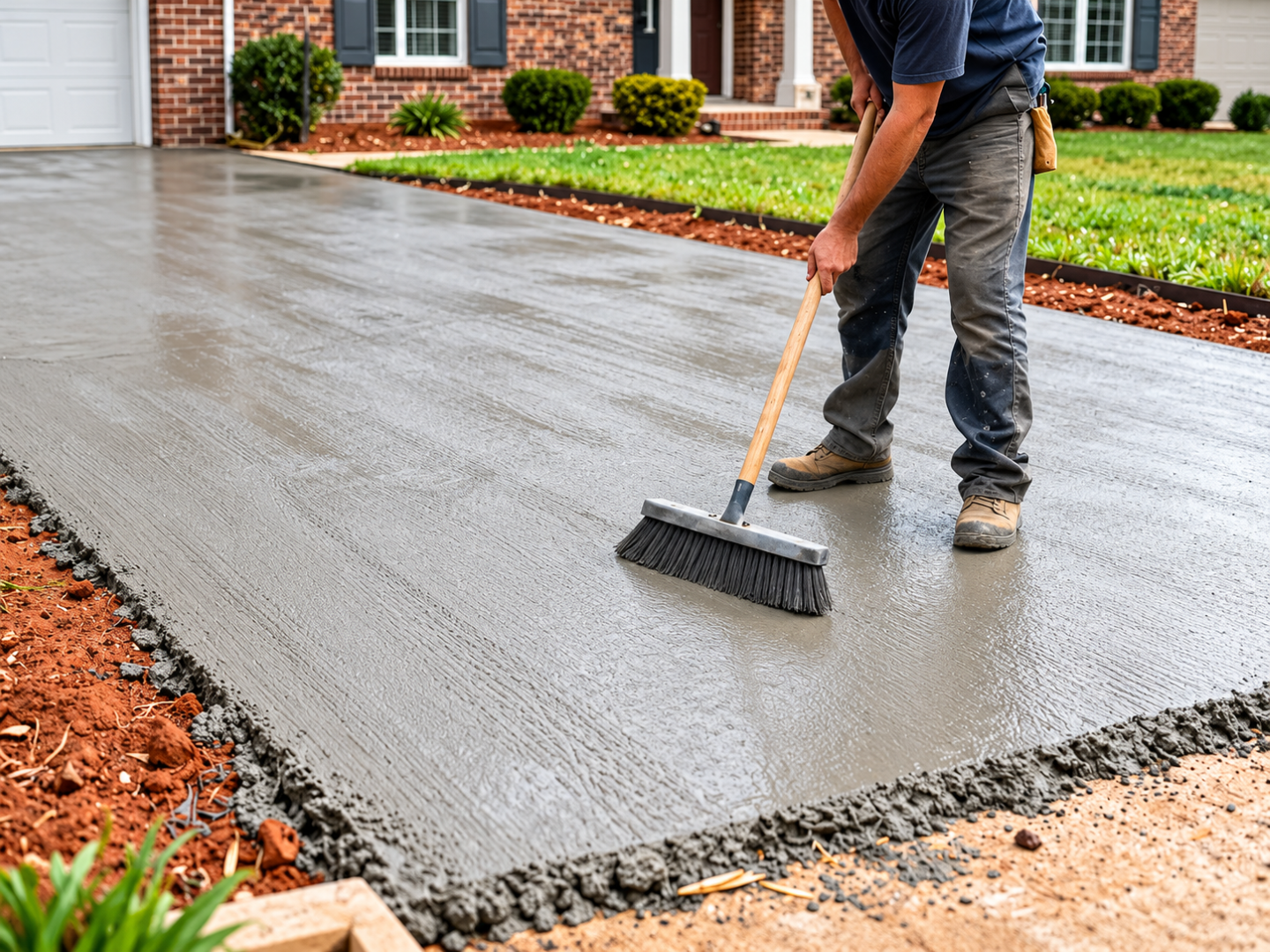
After the base meets the project requirements, we establish forms that define the driveway's shape, thickness, and final elevations. We consider the intended vehicle loads and whether reinforcement is appropriate for the specific installation. Reinforcement, when specified, must be properly positioned because it cannot compensate for inadequate concrete thickness or an unstable subgrade. For exterior driveway applications in Minnesota, selecting a suitable concrete mixture is important. Properly specified air-entrained concrete contains microscopic air spaces that help accommodate pressure associated with freezing moisture. The mixture must also meet applicable strength and durability requirements for the expected exposure conditions.
Step 4: Joint Installation, Concrete Curing, and Final Project Review
Once the surface has been finished, we complete the required joint details according to the project design. Control joints help manage cracking caused by normal concrete shrinkage, while properly placed isolation joints allow necessary separation from adjoining structures or pavement. Curing is another important part of the installation. Fresh concrete needs appropriate moisture and temperature conditions to develop its intended strength and durability. During warmer weather, curing procedures help reduce premature moisture loss. In cooler conditions, additional protection may be required to prevent early-age freezing.
Cracks, uneven pavement, and drainage problems shouldn't make getting in and out of your property frustrating. We help homeowners explore practical concrete driveway, concrete patio, concrete repair, and stamped concrete solutions suited to their space and Minnesota's changing seasons. Whether you're updating an aging entrance or planning new pavement, we're ready to discuss your goals. Contact our team today to request an estimate and take the next step toward a dependable driveway.
Frequently Asked Questions
Q: How thick should a residential concrete driveway be in Eagan, MN?
Many standard residential driveways are constructed with approximately four inches of concrete when the underlying base is suitable and the pavement will primarily support passenger vehicles. However, thickness requirements can change depending on soil conditions, vehicle loads, drainage, and the project's design. Driveways regularly used by heavy trucks, recreational vehicles, or other substantial equipment may require a thicker slab or additional structural considerations.
The material beneath the pavement is just as important as the slab itself. In Eagan, inadequate compaction, unstable soil, and trapped moisture can contribute to cracking or movement during seasonal temperature changes. We recommend evaluating the site and anticipated vehicle use before establishing the final thickness and base specifications.
Q: Do I need a permit to replace or widen my concrete driveway?
Yes. The City of Eagan requires a zoning permit for driveway replacements and expansions. This review helps ensure that proposed improvements comply with applicable requirements involving driveway dimensions, hard-surface coverage, setbacks, and drainage. Homeowners should review these requirements before scheduling excavation or pavement removal.
Additional authorization may be necessary when work affects public infrastructure. For example, replacing or modifying existing curb and gutter requires a right-of-way permit in addition to the zoning permit. Eagan also places restrictions on driveway width within the public right-of-way. We recommend confirming the proposed dimensions and permit responsibilities before construction begins to avoid unexpected changes or delays.
Q: How long does concrete driveway installation take, and when can I park on the new surface?
Many residential driveway installations require approximately two to five working days for demolition, excavation, base preparation, forming, and concrete placement. Larger projects or those involving extensive drainage corrections, unstable soil, or complicated access may require additional time. Weather can also influence the schedule, particularly during periods of heavy rainfall or low temperatures.
After placement, the concrete needs time to gain sufficient strength before supporting vehicles. Approximately seven days is a common initial guideline for normal passenger vehicle use under suitable curing conditions, but the actual waiting period must follow the project specifications and concrete supplier's recommendations. Concrete continues developing strength beyond that period. We explain access restrictions so homeowners can arrange temporary parking without risking damage to the new driveway.
Q: Why do concrete driveways crack or develop surface scaling after Minnesota winters?
Several conditions can contribute to cracking, including normal drying shrinkage, settlement beneath the slab, improper joint spacing, inadequate base preparation, and excessive loading. Freezing and thawing may worsen existing damage when water enters openings or the underlying materials experience seasonal movement. Some cracking can occur even in properly constructed concrete, but thoughtful design and workmanship help control its location and severity.
Surface scaling is a different concern. It involves deterioration of the concrete's upper layer and can be associated with inadequate air entrainment, improper finishing, early exposure to deicing chemicals, or unsuitable curing conditions. Selecting an appropriate mixture, protecting fresh concrete, and following recommended winter maintenance practices help reduce these risks. When evaluating an older driveway, understanding the cause of deterioration is important before deciding whether repairs or replacement make more sense.
Q: What determines the cost of a concrete driveway replacement in Eagan, MN?
The overall cost depends on the driveway's dimensions, existing pavement condition, removal requirements, and amount of site preparation needed. A relatively level driveway with a stable base may be less complicated than one requiring extensive excavation, replacement of unsuitable soil, or corrections to drainage and elevation. Additional thickness, reinforcement, and decorative finishing options can also influence the estimate.
Access and layout are important pricing considerations as well. Tight spaces, unusual driveway shapes, adjoining sidewalks, and work near existing curbs may require additional planning or labor. Disposal of the old pavement and any necessary permit-related work should also be considered. We recommend requesting a detailed written estimate that identifies demolition, base preparation, concrete specifications, finishing, and cleanup so you can understand the full scope before moving forward.